
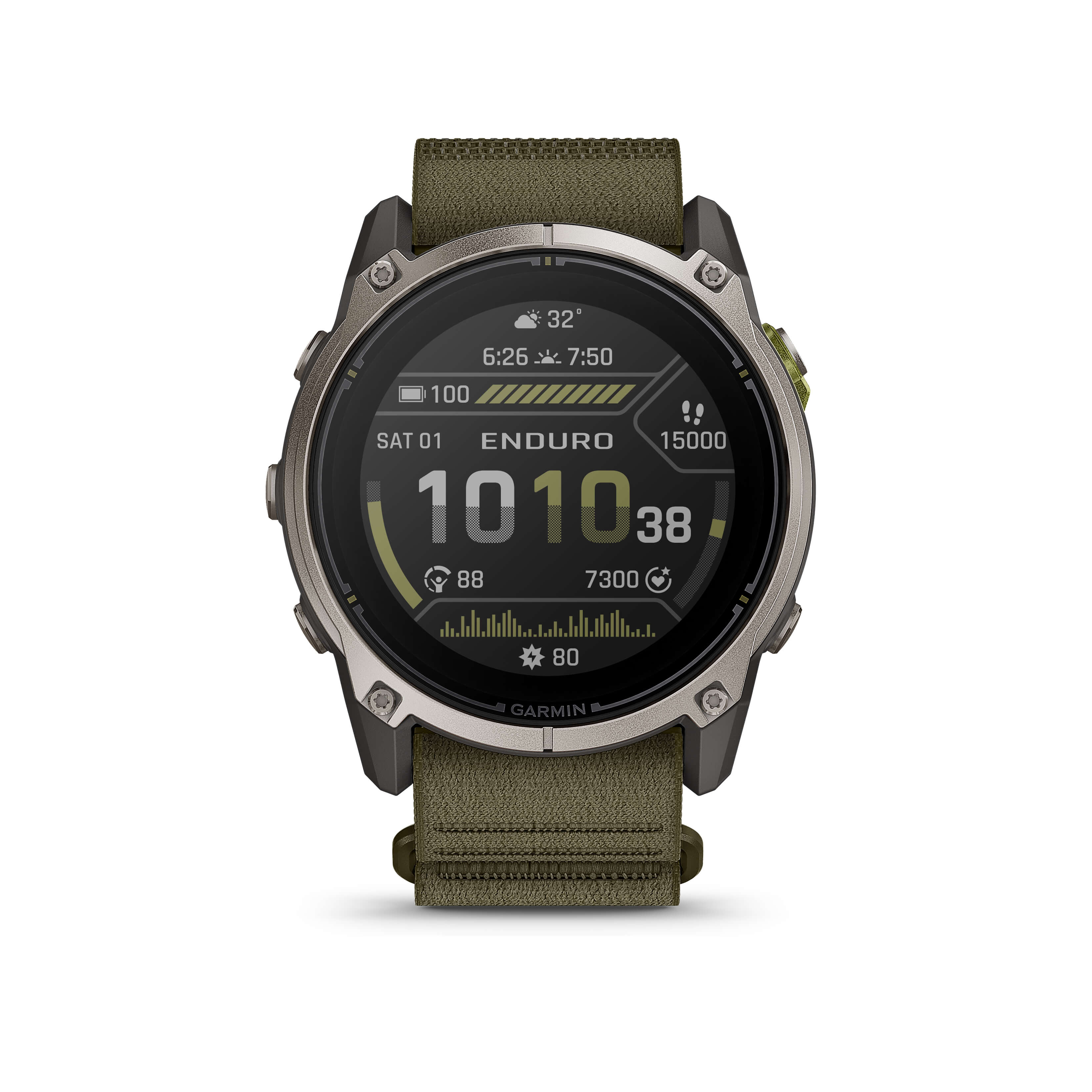
Most smartwatches are designed around a day. The Enduro line has never been one of those watches — it's built around the idea that a single "activity" might run for four days straight, somewhere with no plug sockets, and the watch needs to not even slightly care. Garmin's just announced the fourth generation, and the headline number is the one that matters most for this watch's actual audience: up to 320 hours of battery life in activity mode, or 90 days in smartwatch mode, with solar charging doing a meaningful share of the work.
This isn't a watch for most people though. It's excellent for a specific type of person — and worth being honest about who that is before getting into what's new.
What's Actually New Here
Comprehensive power modes. Rather than one blanket battery setting, Enduro 4 gives you presets built around what you're actually doing — Max Accuracy for full-feature tracking on shorter efforts, Max Battery for the genuinely extreme stuff, where you're trading some tracking precision for the ability to keep recording for the better part of a fortnight.
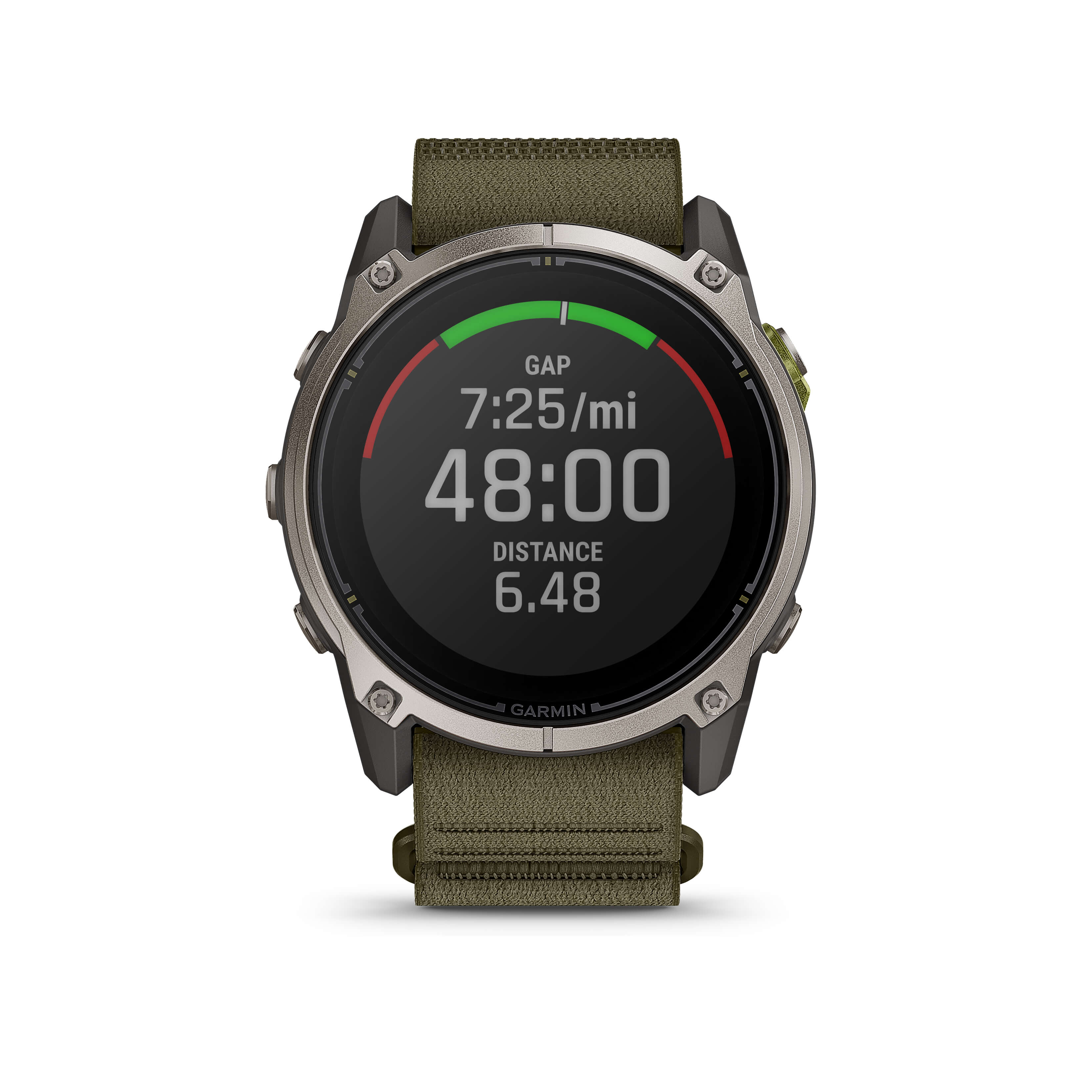
Grade-adjusted pace and rolling pace. This is the feature that'll matter most to anyone training on hilly or mountainous terrain rather than flat road. Grade-adjusted pace-based workout targets keep your effort honest on a climb instead of just telling you you've slowed down — and grade-adjusted rolling pace gives a real-time read on pace that actually accounts for the terrain you're on, rather than a flat number that means something different on a 15% gradient than it does on the flat.
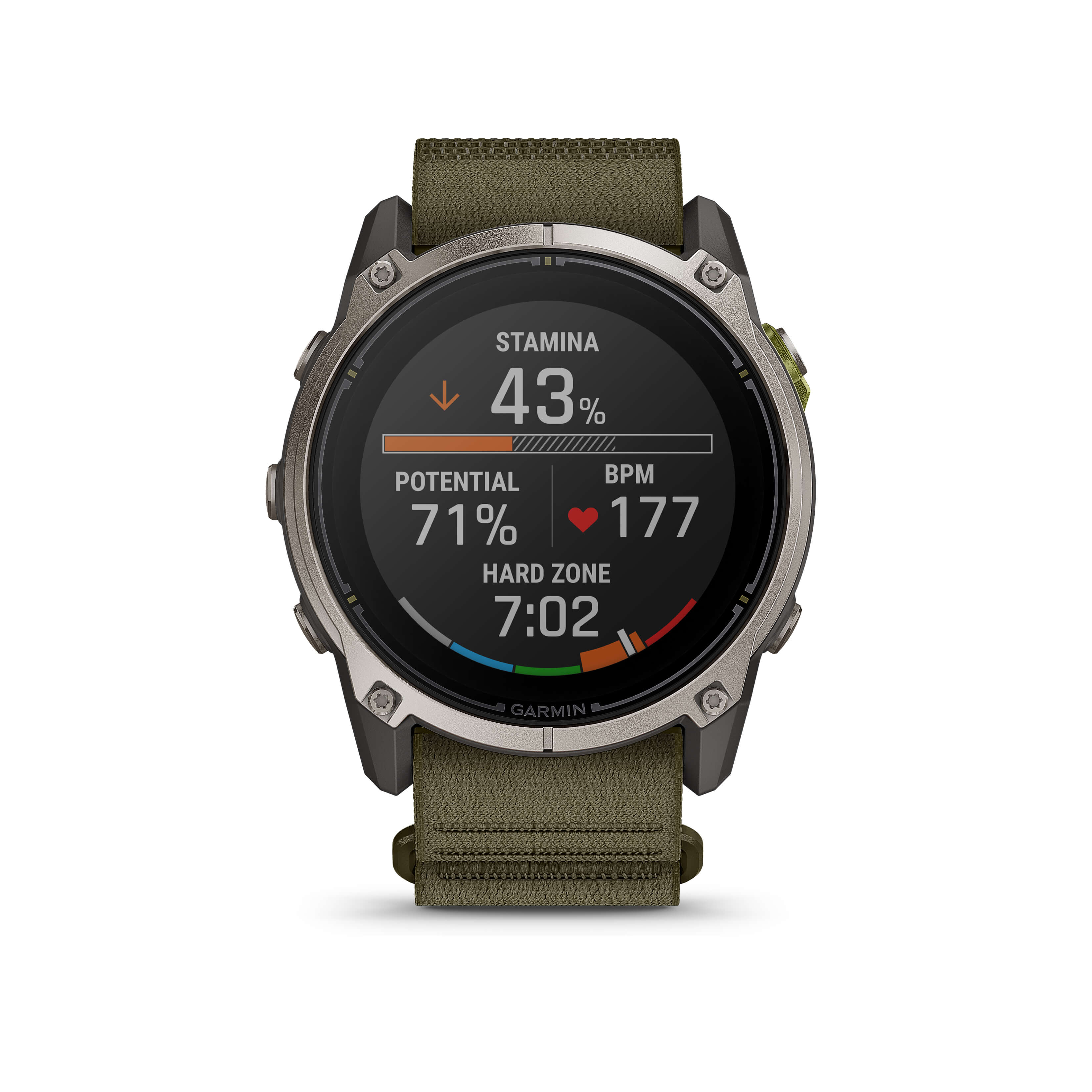
Stamina zones and stamina curve. Garmin's stamina metric isn't new, but it's had a meaningful upgrade here — stamina zones show how your current effort is drawing down your reserves in real time, and the stamina curve maps how your endurance actually changes over time, mapped against fitness and training history, rather than just the heart-rate-based guesswork a lot of "readiness" scores rely on.
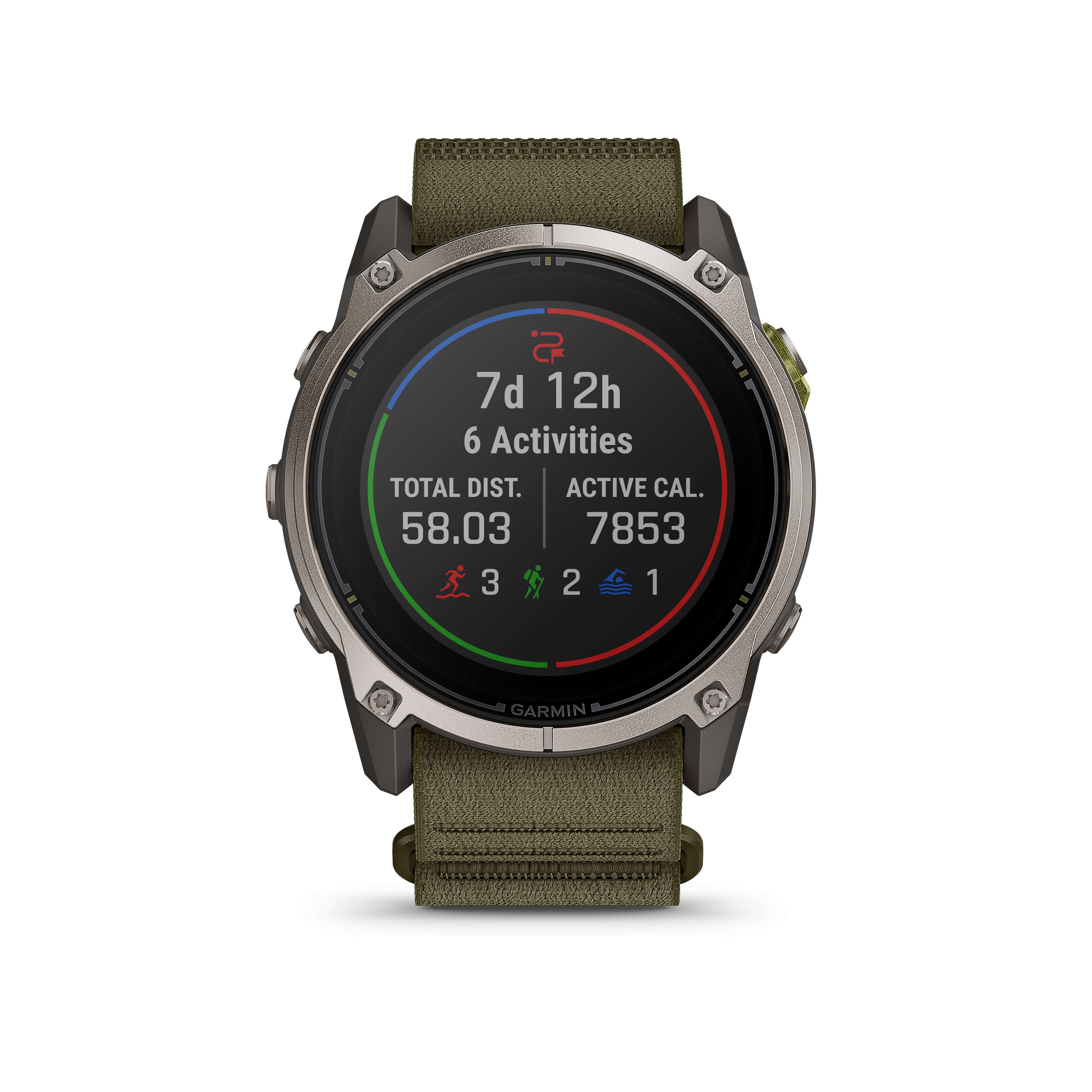
Garmin Epic. A genuinely nice touch for anyone doing multi-day events or expeditions — Epic lets you string multiple activities together into one continuous story in Garmin Connect, spanning days, weeks or months, with photos attached and health/performance data aggregated across the whole stretch. If you've ever tried to piece together a week-long trek from six separate activity files afterwards, this is the fix.
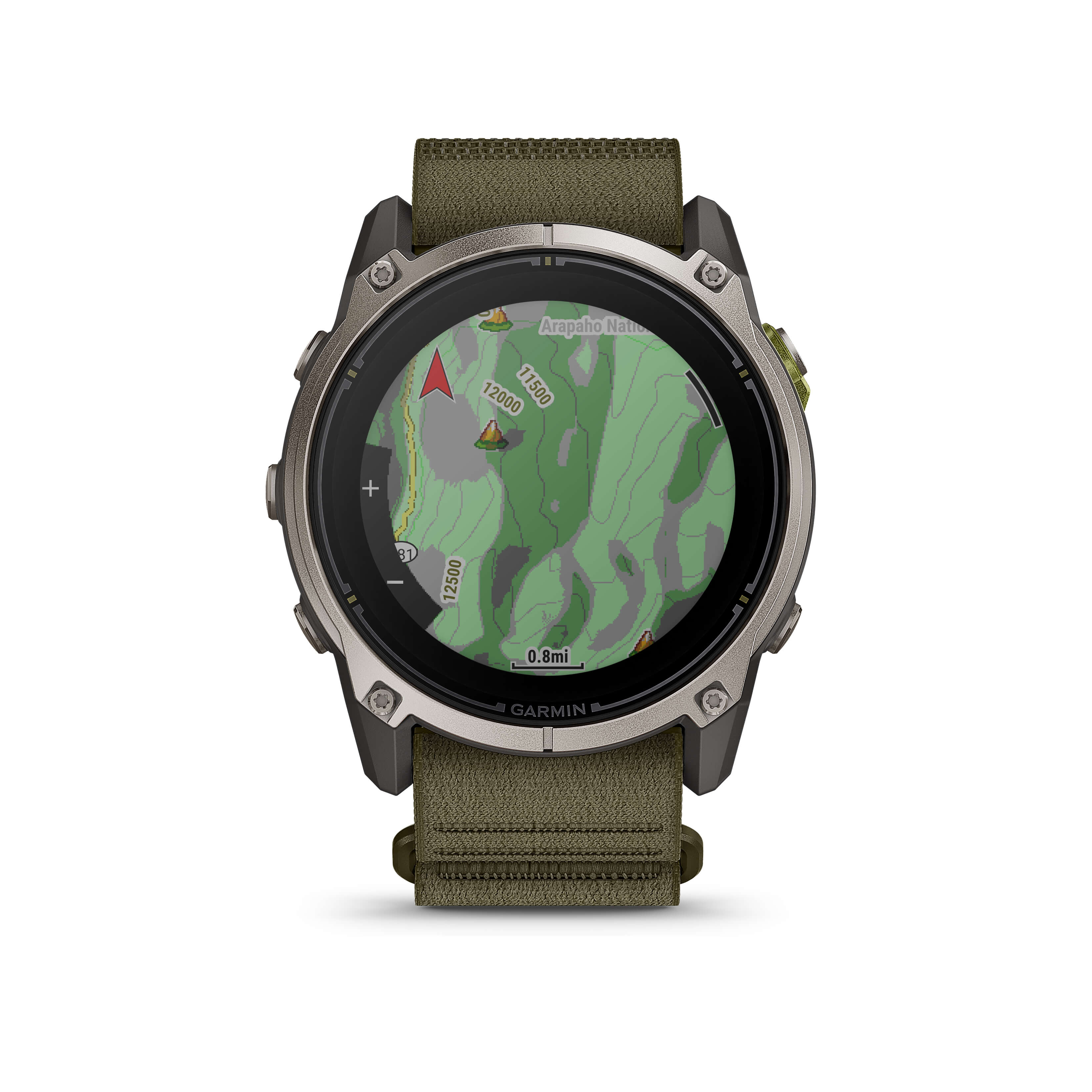
A properly upgraded map engine. 50% more RAM than the Enduro 3 and a faster, smoother map engine — 30% faster panning — with a new perspective view that gives more useful detail both close up and further out on the built-in routable maps. For anyone navigating off trail or in genuinely remote terrain, this is a bigger deal than it sounds on paper.
Expanded rowing and rucking tools. Enhanced indoor rowing metrics (VO2 max, power curve) and rucking features that let you adjust pack weight mid-activity and set calorie targets — niche additions, but a sign Garmin's still building for the specific sports this watch's audience actually does, rather than just chasing general fitness-tracker features.
The Build
At 66 grams, Enduro 4 is genuinely light for what it is — a 51mm case with a titanium bezel, fiber-reinforced polymer case, and a Power Sapphire scratch-resistant lens sitting over the 1.4" MIP display and solar lens. It's rated to 10 ATM water resistance, has a built-in LED flashlight with both white and red-light modes (a small feature that matters a lot more than it sounds like at 4am on a multi-day event), and comes with 64 GB of onboard memory — enough room for offline maps, a proper music library, and activity data without having to think about storage on a trip.
The new ComfortFit Fabric Band is the other headline design change — a QuickFit band built for comfort, durability and moisture-wicking over long wear, with the same quick-swap functionality Garmin's QuickFit bands have offered for a while now, just in a material actually suited to multi-day wear against skin.
Who This Is Actually For
This is the honest part most coverage skips. Enduro 4 isn't a better Fenix, and it isn't trying to be a daily smartwatch that happens to track runs.
Buy this if:
- You do genuine multi-day events — ultras, expedition races, long thru-hikes — where charging access is limited or nonexistent
- You're regularly training or racing on serious vertical, and grade-adjusted pace data would change how you pace effort rather than just being a nice-to-have
- You want one watch that can realistically go two weeks without touching a charger in daily use
Look elsewhere if:
- You want a watch for general fitness tracking, daily training, and the occasional half-marathon — a Forerunner or a standard Fenix gives you nearly everything here at a meaningfully lower price
- Smart features (payments, full app ecosystem, cellular) matter to you day-to-day — this watch is deliberately built around endurance and battery life ahead of smartwatch convenience
- Reviewers have already flagged the price as steep for what most people need, and that's a fair read — this is a specialist's tool, priced like one
Price and Availability
Enduro 4 is available now at a suggested retail price of £799.99 / €899.99. That's a genuine step up from mainstream GPS watches, and independent coverage has already noted it as an "eye-watering" ask for a watch most buyers will never fully use — which is less a knock on the watch than a reminder of exactly how narrow its intended audience is.
How It Stacks Up Against the Enduro 3
If you already own an Enduro 3, the upgrade case rests almost entirely on three things: the near-tripling of the useful map engine speed (30% faster panning, 50% more RAM), the new grade-adjusted metrics if you train on serious terrain, and Garmin Epic if you regularly do multi-day events you want documented as one continuous story rather than a pile of separate files. If none of those specifically solve a problem you have, the Enduro 3 remains a genuinely capable watch and isn't suddenly obsolete.
So, Is It Worth It?
For the person doing genuine multi-day ultras, expedition trekking, or mountain racing where battery anxiety is a real and recurring problem, Enduro 4 solves that problem about as thoroughly as a wrist-worn device currently can — and the grade-adjusted metrics and Garmin Epic logging are genuine, not marketing-only, upgrades for that specific use case. For everyone else, including most serious runners and hikers, a Fenix or Forerunner will do 90% of what you need at considerably less than £799.99. This isn't a watch to want — it's a watch to need, and most people reading a buying guide for it don't, yet.